
You are helping your child brush when you notice something unexpected: a small permanent tooth appearing behind a baby tooth that is still in place. For a moment, it can look as though an entirely new row of teeth is forming. Parents sometimes call this “shark teeth,” and although the sight can be startling, it is not automatically a dental emergency. What matters is whether the baby tooth is loosening, how the permanent tooth is coming in, and whether your child has any pain or swelling.
Why Does a Permanent Tooth Grow Behind a Baby Tooth?
Baby teeth are meant to make room for the permanent teeth developing beneath them. As a permanent tooth moves toward the surface, it usually helps dissolve the baby tooth’s root, which allows that tooth to loosen and fall out. Sometimes the permanent tooth follows a slightly different path and begins to emerge behind the baby tooth instead of directly underneath it.
This is especially noticeable around the lower front teeth, where there is not much room to hide a new arrival. The permanent tooth may be visible even though the baby tooth has only just started to wiggle, or the baby tooth may still feel surprisingly firm. That temporary double row is what people mean when they talk about shark teeth in children. It can also reflect limited space in the jaw, although seeing two rows does not by itself prove that a child will need orthodontic treatment.
Is a Second Row of Teeth an Emergency?
In many cases, it is not an emergency; if your child is comfortable and the baby tooth is already becoming loose, the area can often be watched while nature finishes the job. The appearance alone can seem more urgent than the situation really is, so try to look at the whole picture. Notice whether the baby tooth is moving a little more from week to week, whether the permanent tooth is continuing to emerge, and whether your child can brush and eat normally. A small amount of tenderness can happen as teeth loosen, but significant pain, swelling, pus, fever, or facial swelling calls for professional attention. If an injury happened recently, do not assume the change is simply part of normal tooth eruption.
What Can Parents Do at Home?
If the baby tooth is genuinely loose, your child can gently wiggle it with a clean finger or tongue. There is no need to turn the process into a daily test or pull on a tooth that is still firm. Forcing it can frighten a child, cause unnecessary bleeding, and make future dental care feel more threatening than it needs to be.
Cleaning matters because food and plaque can collect between the two teeth. Help your child angle a soft toothbrush toward both the baby tooth and the new tooth behind it, using gentle pressure around tender gums. Floss where the teeth touch if the area is accessible, but do not force floss into a space that is painful or difficult to reach. If your child cannot keep the area clean, that is a practical reason to ask a dentist for help even when there is no severe discomfort.
When Should a Pediatric Dentist Check “Shark Teeth”?
An appointment is sensible when the permanent tooth continues to come in but the baby tooth remains firm, or when there has been little change over time. A dentist should also examine the area if your child has ongoing pain, swelling, bleeding that does not settle, difficulty eating, or gum irritation caused by trapped food. Other reasons to arrange a visit include several permanent teeth erupting out of line, obvious crowding, or a new tooth emerging high in the gum or toward the roof of the mouth. Upper front teeth deserve a closer look because their eruption pattern can be less predictable than the familiar lower-front “shark teeth” appearance. You do not have to decide at home whether the baby tooth needs to be removed; the purpose of the visit is to understand what is happening before choosing any treatment.
What Might Happen at the Dental Visit?
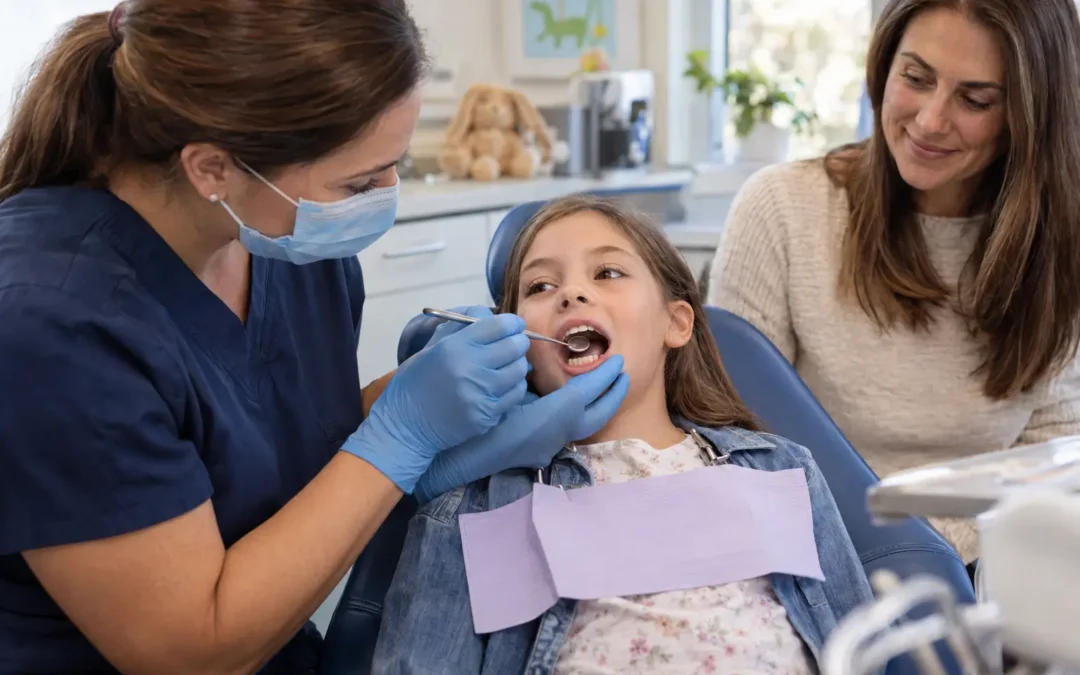
The dentist will look at the position of both teeth, check how loose the baby tooth is, and consider whether the permanent tooth has enough room. An X-ray may be useful when the eruption path or remaining baby-tooth root cannot be understood from the examination alone. Not every child needs imaging, and not every retained baby tooth needs immediate treatment.
Sometimes the most appropriate plan is simply to monitor the area and let the baby tooth fall out naturally. If the tooth remains firm and is clearly blocking the permanent tooth, removing it may create the space the new tooth needs to move forward. These decisions are based on the individual mouth, not on a single waiting period that applies to every child.
The dentist may also recommend watching the child’s overall spacing or arranging an orthodontic evaluation if crowding is significant. That recommendation is not a prediction that extensive treatment will be needed; it is a way to follow the developing bite while there is time to make thoughtful decisions.
Will the Permanent Tooth Move Forward on Its Own?
Often, a permanent lower front tooth gradually moves closer to its intended position after the baby tooth is gone, especially when there is adequate space. The tongue and the natural development of the jaw may help, but the change is usually gradual rather than immediate.
Some teeth remain slightly behind the dental arch, and that does not mean anyone did something wrong. A crowded mouth may need more guidance, while another child’s teeth may settle as the jaw continues to grow. The dentist can monitor the position during routine visits and explain whether observation is still reasonable. If orthodontic care becomes useful later, an early record of the eruption pattern can make that conversation more informed.
A Calm Next Step for a Growing Smile
Finding permanent teeth growing behind baby teeth can be unnerving because the change seems to happen overnight. Most parents are not expected to know which eruption patterns will resolve on their own and which ones need help. Pay attention to comfort, cleanliness, movement of the baby tooth, and the position of the new tooth, then seek an examination when something does not seem to be progressing normally.
Get Reassurance From a Pediatric Dentist
If you are unsure whether your child’s new tooth can be watched or should be examined, Houston Dental Implants can provide a calm, age-appropriate evaluation. Learn more about pediatric dentistry or contact the office to schedule a visit and leave with a clearer understanding of what your child’s smile needs next.