
A dental implant is meant to feel steady when you bite and chew. Once it has healed, you generally should not notice any movement at all. That is why even a slight wobble can be unsettling, especially if the implant has been comfortable for years. The good news is that a loose dental implant does not always mean the implant itself has failed, but it does need to be examined promptly.
What feels like movement can come from different parts of the restoration. Sometimes the implant remains firmly attached to the jawbone while the crown or the connector above it has loosened. In other cases, inflammation, bone loss, or a problem with healing may affect the implant itself. A dentist needs to identify which part is moving before recommending treatment.
Which Part of the Dental Implant Is Moving?
A single-tooth implant has several components. The implant post sits inside the jawbone, an abutment connects to the post, and a crown forms the visible replacement tooth. Movement in any part of this structure may make the entire tooth feel loose, even though the causes and treatments are quite different.
A loose implant crown may shift slightly while the implant post remains stable. The cement holding the crown can weaken, or a screw inside the restoration may loosen. These mechanical problems often have a more straightforward solution than movement of the implant post, particularly when they are addressed before the surrounding components become damaged.
Movement at the implant itself is more serious. A properly integrated implant is held securely by the surrounding bone, so the post should not rock or rotate. If it does, the bond between the implant and the jawbone may have been compromised.
Why Would a Dental Implant Feel Loose?
A loose dental implant can develop soon after placement or years later. Timing provides useful information, but it does not establish the cause by itself. An examination and dental imaging are usually needed to see what is happening below the gumline.
- A loose crown or abutment screw
- Damage to the crown or another part of the restoration
- Difficulty with the implant bonding to the jawbone during healing
- Inflammation or infection in the tissues around the implant
- Bone loss that has reduced the implant’s support
- Excessive pressure from grinding, clenching, or an uneven bite
- Physical trauma involving the mouth or jaw
A recently placed implant needs time to integrate with the bone. Putting too much pressure on the area during this stage may interfere with healing, although many factors can influence integration. If an implant that has been stable for years begins to move, a mechanical complication, changes in the bite, or loss of supporting tissue may be involved.
When Gum Inflammation Affects an Implant
Dental implants cannot develop cavities, but the gums and bone around them can still become unhealthy. Plaque may collect around an implant just as it does around a natural tooth. This can lead to inflammation in the gum tissue, sometimes called peri-implant mucositis.
If inflammation progresses and begins affecting the supporting bone, the condition is known as peri-implantitis. Bone loss can gradually reduce the implant’s stability, and the problem may not cause severe pain at first. Redness, tenderness, or bleeding around an implant should therefore be taken seriously rather than dismissed because the artificial tooth still looks normal.
A history of gum disease, smoking, difficulty controlling plaque, and certain health conditions may increase the likelihood of problems around an implant. These risk factors do not prove that peri-implantitis is present. They help the dentist understand what may be contributing to the symptoms and how the implant should be monitored.
Warning Signs That Need Dental Attention
Visible movement is enough reason to arrange an examination. Other changes around the implant may provide additional clues about whether the problem involves the restoration, the gums, or the supporting bone. Paying attention to these signs can help a dentist evaluate the condition before further damage occurs.
- Movement when biting, chewing, or touching the replacement tooth
- Pain or pressure around an implant that was previously comfortable
- Red, swollen, or tender gums
- Bleeding while brushing or cleaning around the implant
- Pus, an unpleasant taste, or persistent bad breath near the area
- Gum recession that exposes part of the implant
- A change in how the implant meets the opposing teeth
- A chipped, cracked, or visibly damaged implant crown
Pain is not the only measure of seriousness. Bone loss and inflammation around an implant can develop without intense discomfort, while a loose screw may create obvious movement but little pain. Either situation deserves attention because waiting can turn a manageable repair into a more complicated problem.
Rapidly increasing swelling, fever, difficulty swallowing, or trouble breathing requires urgent care. Those symptoms may indicate that an infection is spreading beyond the immediate area and should not wait for a routine appointment.
What Should You Do If Your Implant Feels Loose?
Call your dentist and explain when you first noticed the movement, whether the area hurts, and whether you recently bit something hard or experienced an injury. Avoid chewing on that side until the implant has been evaluated. Choosing softer foods can reduce pressure on the restoration in the meantime.
Do not repeatedly wiggle the tooth to determine how loose it is. That can place additional strain on a damaged crown, screw, or surrounding tissue. You should also avoid trying to tighten, remove, or glue any part of the restoration at home, since household adhesives are not intended for use inside the mouth and may complicate professional repair.
Continue cleaning the area carefully unless your dentist gives you different instructions. Use a soft toothbrush and avoid aggressive pressure around sore tissue. If cleaning causes bleeding, mention it when scheduling the appointment rather than stopping oral hygiene altogether.
Can a Loose Dental Implant Be Saved?
Whether the implant can be saved depends largely on which component is moving and why. If only the crown or abutment screw has loosened, the dentist may be able to secure, repair, or replace that component while leaving the integrated implant post in place. Early attention may also prevent a loose restoration from damaging other parts of the system.
Treatment becomes more involved when infection or bone loss affects the implant’s foundation. Depending on the extent of the problem, care may include professional cleaning, treatment of inflamed tissue, bite adjustment, or another procedure intended to control disease around the implant. A truly mobile implant post may need to be removed if it is no longer integrated with the jawbone.
Removal does not automatically rule out receiving another implant in the future. The area may need time to heal, and bone grafting could be recommended if support has been lost. The next step depends on the condition of the site, the cause of the problem, and the patient’s overall oral and medical health.
How a Dentist Evaluates the Problem
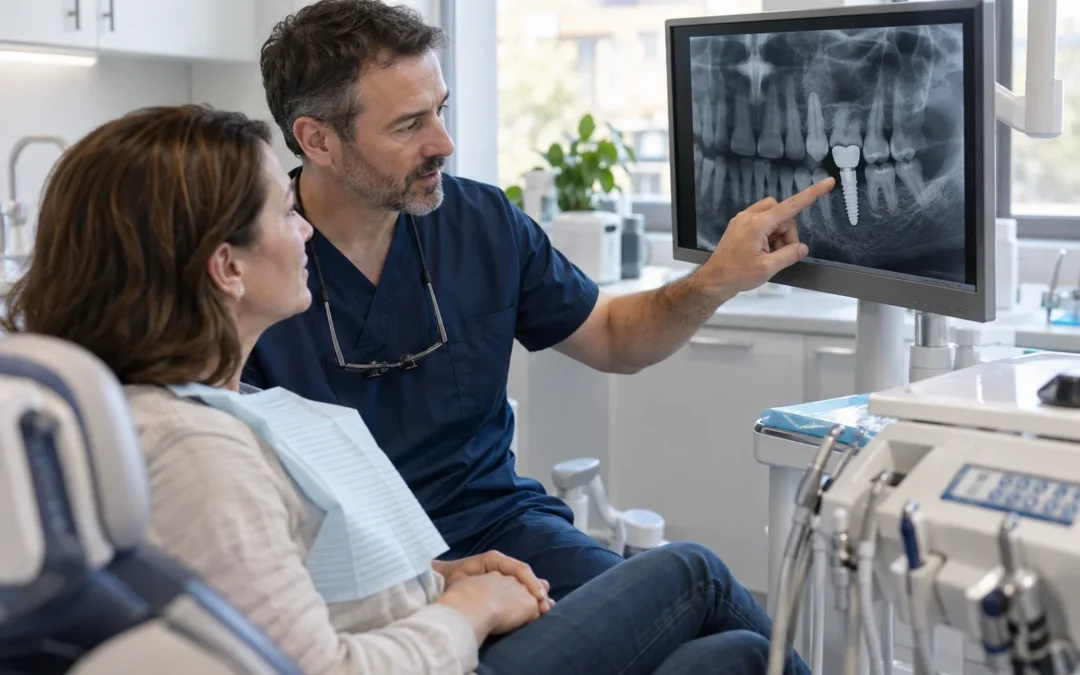
The dentist will usually examine the crown, gums, bite, and neighboring teeth. They may check whether the movement comes from the visible restoration or from the implant beneath it. Dental X-rays or three-dimensional imaging can help reveal changes in the surrounding bone that cannot be seen during a visual examination.
Be prepared to discuss when the implant was placed, whether it has been repaired before, and any recent changes in your health or medications. Information about grinding, clenching, smoking, or a history of gum disease may also be relevant. These details help the dentist look beyond the immediate symptom and identify why the problem developed.
Protecting the Implant After Treatment
Once the cause has been addressed, follow the cleaning instructions provided for your specific restoration. Implant crowns, bridges, and implant-supported dentures do not all require exactly the same tools. A dentist or dental hygienist can demonstrate how to clean areas that ordinary brushing may not reach well.
Regular dental visits allow the implant, gum tissue, and supporting bone to be monitored over time. Your dentist can also check whether the bite is placing too much force on the restoration. If you grind or clench your teeth, a custom nightguard may be recommended to reduce stress while you sleep.
Most importantly, do not ignore new movement simply because the implant is not painful. A loose crown may be repairable, and early inflammation may be easier to manage before substantial bone support is lost. Prompt evaluation gives you the best chance of addressing the underlying problem and protecting the restoration.
Get a Loose Dental Implant Evaluated
If your implant crown moves or the implant no longer feels secure, Houston Dental Implants can determine which component is causing the problem and explain the available treatment options. The practice provides comprehensive dental implant services along with periodontal and surgical care in one location. Contact the office to schedule an evaluation rather than waiting for the movement or discomfort to worsen.