
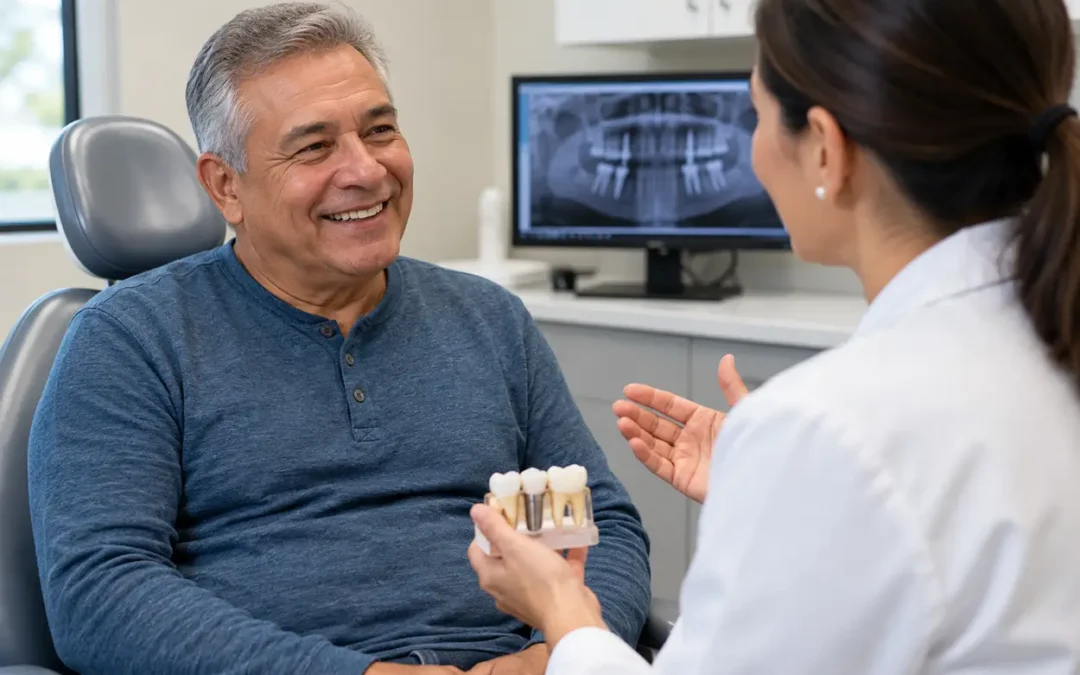
If you have diabetes and are thinking about replacing a missing tooth, you may have heard that dental implants are risky or simply not an option. However, neither assumption is entirely accurate. Many people with diabetes can receive dental implants, but treatment planning must consider blood sugar management and overall oral health.
The important question is not just whether you have diabetes. It is whether your current health, gum condition, and treatment needs make implant surgery a reasonable choice for you.
Does Diabetes Rule Out Dental Implants?
No. Many patients with diabetes can successfully receive dental implants, particularly when blood glucose is well controlled. The American Dental Association notes that implants are generally safe and reliable in people with properly controlled diabetes, although poorly controlled diabetes can complicate healing and affect long-term results.
Having diabetes does not automatically determine whether someone is eligible for dental implants. Your dentist will consider your medical history, current diabetes management, gum health, available bone, and the condition of the tooth or teeth being replaced. Some people can move forward with treatment after an evaluation; others may benefit from improving their health or addressing an oral problem first.
Why Blood Sugar Control Matters for Implant Healing
An implant is placed into the jawbone, where the surrounding bone gradually heals around its surface. This process, known as osseointegration, allows the implant to form a stable foundation for a replacement tooth. Successful healing depends not only on the implant itself but also on healthy surrounding tissues and the body’s ability to recover.
When blood glucose remains elevated, wound healing and the body’s response to infection may be less effective. Research has linked poorer glycemic control with a greater likelihood of complications around implants, although individual outcomes vary and studies do not establish one blood sugar threshold that is appropriate for everyone. This is why your dental team may ask about recent diabetes results and whether your condition has been stable.
An elevated blood sugar reading does not automatically mean dental implant treatment is impossible. It does mean the dentist needs enough information to weigh the benefits and risks rather than relying on a blanket rule.
What Your Dentist Will Want to Know Before Surgery
Expect questions about your diabetes medications, recent blood sugar management, and any history of slow healing or infections. Your dentist may ask about your most recent HbA1c result, which reflects average blood glucose over roughly the previous two to three months. This result is one factor in the evaluation rather than the sole measure of eligibility for implant surgery.
A thorough oral examination is equally important. The team needs to check for active gum inflammation, untreated infection, and enough healthy bone to support the planned implant. Imaging may help show the available bone and guide placement. If an oral health concern is identified, it may need to be addressed before implant surgery is scheduled.
If your diabetes has been difficult to manage, your dentist may recommend coordinating with your diabetes care provider before proceeding with treatment. That conversation can help the team understand your current health and plan treatment without making assumptions about your medical needs.
Are Implant Complications More Likely With Diabetes?
The concerns most relevant to diabetes involve healing, infection, and the health of the tissues surrounding an implant. People with poorly controlled diabetes may face a less predictable healing course. Some research also suggests a higher risk of peri-implant disease, an inflammatory condition affecting the tissues around implants, especially when other risk factors are present.
These findings reflect general risk patterns and do not necessarily predict an individual patient’s outcome. Smoking, existing periodontal disease, home-care habits, and regular maintenance can also influence outcomes. A comprehensive evaluation considers all these factors rather than attributing every potential complication to diabetes alone.
How to Prepare for an Implant Consultation
You do not need to have all the answers before your consultation. Bring an up-to-date medication list, be ready to discuss how your diabetes is managed, and share any recent HbA1c information you have. Tell the dentist about bleeding gums, loose teeth, recurring infections, or previous problems healing after dental treatment.
It is also worth asking what the evaluation will involve, whether any oral-health treatment is needed first, and how healing will be monitored afterward. Asking these questions can help you better understand your eligibility and the steps involved in treatment.
Caring for an Implant After Placement
After implant placement, follow your personalized postoperative care instructions and attend all scheduled follow-up appointments. Consistent brushing, cleaning around the implant as instructed, and professional maintenance help protect the surrounding gums. Continue following your diabetes care plan and tell your dental team promptly if you notice worsening pain, swelling, drainage, or other unexpected symptoms.
Discuss Your Options With Houston Dental Implants
Diabetes may make you more cautious about dental implant surgery, but it does not mean you have to rule it out. The right next step is an evaluation that considers your blood sugar management, oral health, and healing needs together.
At Houston Dental Implants, you can discuss your concerns, explore our dental implant services and whether treatment is suitable for you, and learn what preparation might be needed before moving forward. Visit Houston Dental Implants to request a consultation and take the next step with a clearer understanding of your options.